Maglev Turbomolecular Vacuum Pumps for Chemical Distillation
Release time: Aug.13.2026
Click volume: Views
In precision chemical processing, fine chemical synthesis, and pharmaceutical manufacturing, vacuum distillation is an indispensable unit operation. Operating under reduced ambient pressure lowers the boiling point of volatile mixtures, allowing heat-sensitive compounds to separate smoothly at lower temperatures. This prevents thermal degradation, cracking, and unwanted polymerization.
However, maintaining deep, stable vacuum levels (often in the millibar to microbar range) exposes processing equipment to harsh, corrosive, and highly volatile vapor streams.
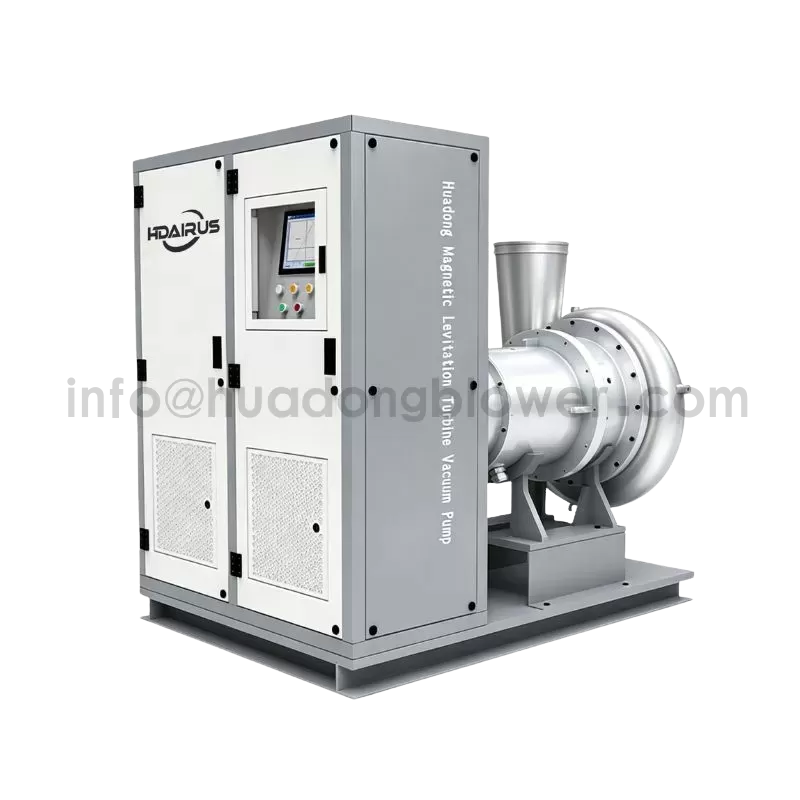
Traditional mechanical-contact vacuum pumps—such as oil-sealed rotary vanes, liquid rings, or dry screws with mechanical gears—face major vulnerabilities under these conditions. Shaft seal degradation, oil backstreaming, and friction-induced hot spots create persistent downtime and extreme safety hazards. Magnetic Levitation (Maglev) Vacuum Technology addresses these operational flaws by suspending the pump's rotating assembly in a contact-free, frictionless electromagnetic field.
1. Failure Modes and Hazards of Conventional Vacuum Systems
CHEMICAL DISTILLATION EXHAUST & VACUUM RISK MATRIX
---------------------------------------------------------------------------------
Risk Factor              Traditional Vacuum System        Process & Safety Impact
---------------------------------------------------------------------------------
Hydrocarbon Ignition     Friction from mechanical         Explosion risk inside the pump
                         bearings generates hot spots    casing when vapor mixes with oxygen

Process Contamination    Lubricating oil backstreams into Loss of high-value distillate purity;
                         the vacuum foreline              catalyst poisoning in closed systems

Corrosive Seal Failure   Chemical vapors attack dynamic   Loss of vacuum depth, atmospheric
                         mechanical shaft seals           leaks, and toxic vapor emissions
---------------------------------------------------------------------------------
Friction Hot Spots and Internal Ignition Risks
Volatile organic compounds (VOCs), solvents, and reactive gases passing through a vacuum pump can ignite if exposed to high temperatures. Conventional pumps rely on mechanical bearings and tight-clearance screws or vanes that generate frictional heat. If an extraction loop experiences a minor oxygen leak, these frictional hot spots become direct internal ignition sources.
The Vulnerability of Dynamic Seals
Distillation vapor streams frequently contain acidic, basic, or highly oxidative gases. Over time, these chemicals attack elastomeric and mechanical shaft seals. Once a dynamic seal degrades, ambient air leaks into the vacuum chamber, destroying the vacuum depth, ruining the batch chemistry, and letting hazardous process vapors escape into the factory atmosphere.
2. Core Advantages of Maglev Vacuum Systems
Mechanical Bearing Vacuum vs. Maglev Vacuum Pumps
---------------------------------------------------------------------------------
Parameter                Mechanical Bearing Pump          Maglev Vacuum Pump
---------------------------------------------------------------------------------
Rotor Support            Ball Bearings / Mechanical Seals Active Magnetic Bearings (AMB)
Internal Lubrication     Required (Oil or Greases)        100% Absolutely Oil-Free
Frictional Contact       Continuous mechanical friction   Zero physical contact friction
Explosion Mitigation     Requires complex flame arrestors Inherently safe; no hot spots
Maintenance Cycle        Frequent oil flushes & seal replacement 10+ Years Maintenance-Free
---------------------------------------------------------------------------------
Active Magnetic Bearing (AMB) Levitation
Maglev vacuum pumps replace physical bearings with electromagnets that levitate the rotor assembly entirely in mid-air. Position sensors track rotor alignment hundreds of times per second, dynamically regulating the magnetic fields to maintain absolute stability without any metal-to-metal contact. With friction completely eliminated, the internal casing remains cool, removing the primary ignition source for reactive vapors.
Absolute Hermetic Isolation and Oil-Free Purity
Because the magnetic field passes through solid materials, the stator coils can be physically isolated from the internal vacuum chamber by a non-magnetic protective sleeve. This enables a completely enclosed, seal-less, and leak-proof pump architecture. Without any internal lubrication oils or greases, there is zero risk of oil backstreaming contaminating high-purity chemical fractions.
3. Continuous Process Integrity and Smart Automation
Chemical refining requires non-stop, predictable operations where sudden vacuum drops can ruin expensive raw materials.
Intelligent Rotor Balancing and Diagnostics: Advanced digital controllers constantly adjust the magnetic field to automatically balance minor liquid or solid carryover on the impellers. If an anomaly occurs, the system logs the data and alerts operators via industrial networks before a failure happens.
High Volumetric Efficiency Under Fluctuating Loads: During the transition between initial light-ends stripping and deep heavy-fraction boiling, vapor loads change drastically. Maglev systems use dynamic frequency controls to instantly adjust motor speed, maintaining a steady vacuum profile across all distillation stages.
Corrosion-Proof Materials and Coatings: The internal gas path can be treated with specialized chemical vapor deposition (CVD) coatings or manufactured from nickel alloys, enabling long-term operation in highly corrosive acid gas environments.
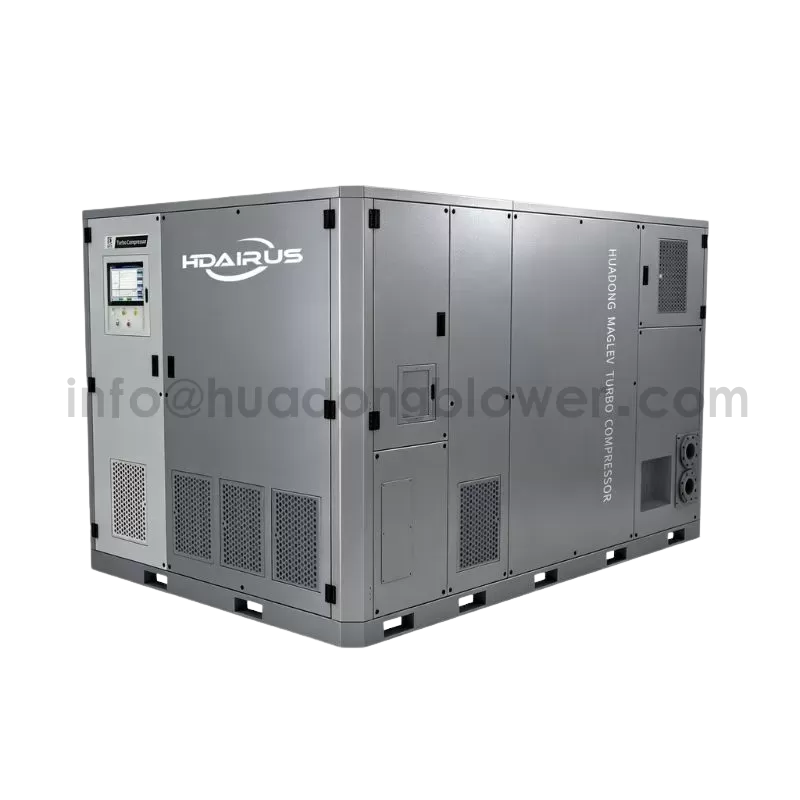
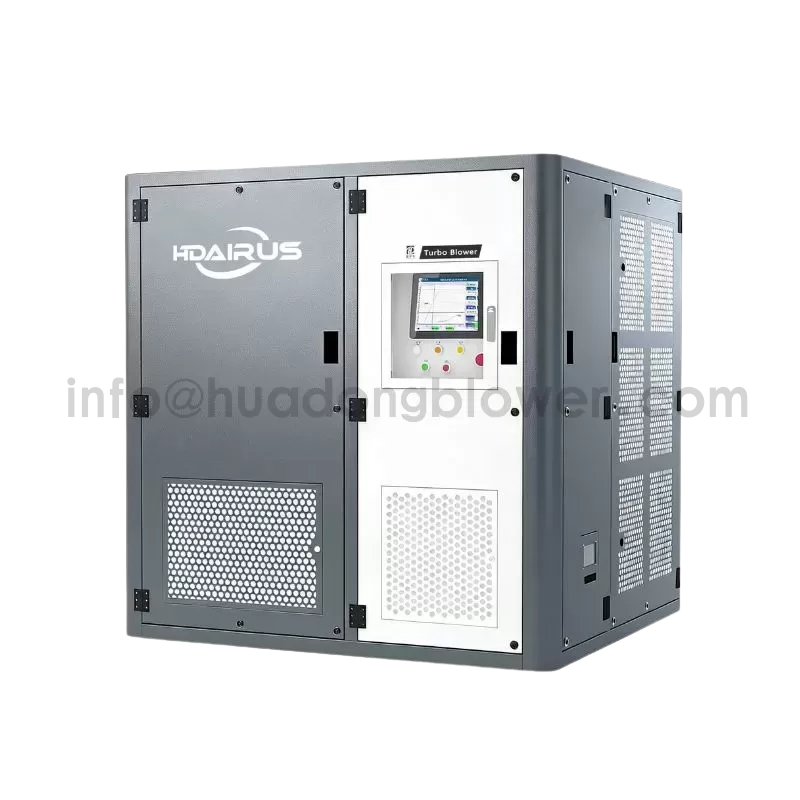
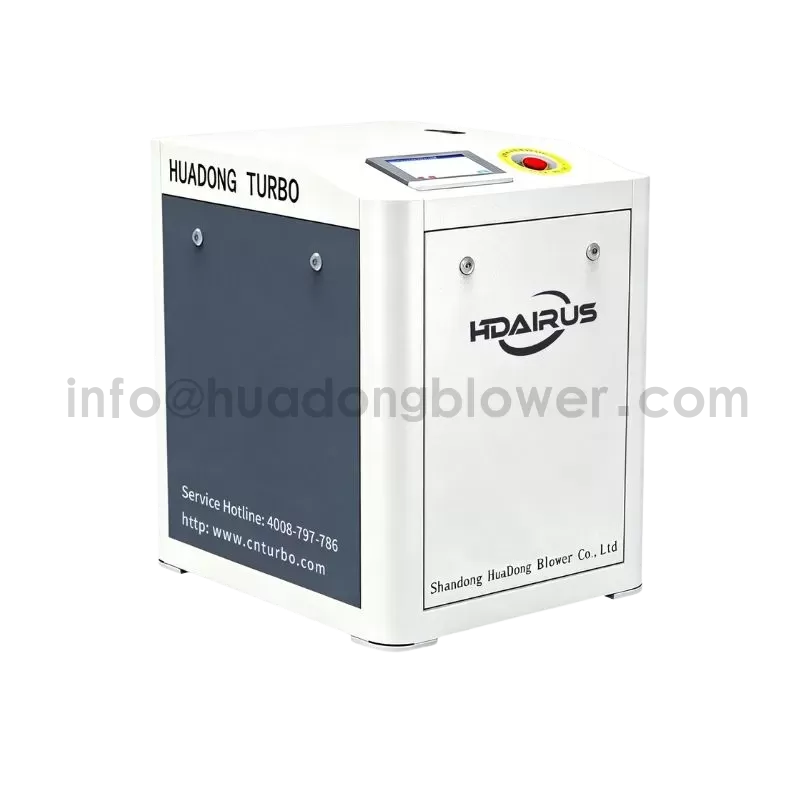
HDAirus: High-Reliability Maglev Engineering for Chemical Processing
HDAirus (Shandong Huadong Blower Co., Ltd.) engineers high-efficiency magnetic levitation (Maglev) turbo machinery and precision industrial equipment engineered for demanding chemical, pharmaceutical, and vacuum process manufacturing applications worldwide.
Factory-Direct Sourcing (Venta directa de fábrica): Purchasing directly from our production facilities removes distributor markups and grants chemical plants direct collaboration with engineering teams for specialized custom process integration.
Turnkey Process Skid Systems: We deliver fully integrated industrial skid systems featuring smart VFD frequency control, integrated safety valves, corrosion-resistant process connections, and explosion-proof electrical enclosures.
Zero-Risk Operational Safety: Designed to provide a continuous, clean, and completely spark-free vacuum, HDAirus equipment protects your high-value distillation columns, improves chemical purity, and ensures plant safety.
Recommended Products