Boosting Electronics Manufacturing Reliability: The Role of Maglev Air Compressors in Cleanrooms
Release time: Aug.06.2026
Click volume: Views
In advanced electronics manufacturing—ranging from semiconductor wafer fabrication and SMT (Surface Mount Technology) assembly to OLED display manufacturing—cleanroom integrity dictates product yield. Modern microelectronics feature line widths measured in nanometers and component pitch gaps far smaller than a speck of dust.
In these controlled environments, compressed air is a critical utility. It powers pneumatic pick-and-place nozzles, cleanroom air knives, optics purging systems, and automated material handling.
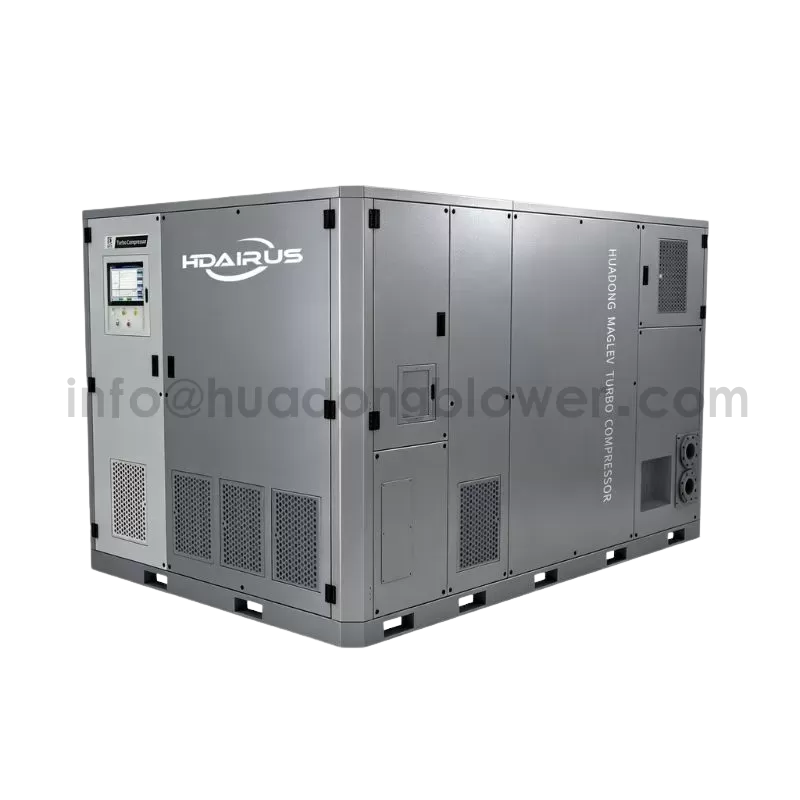
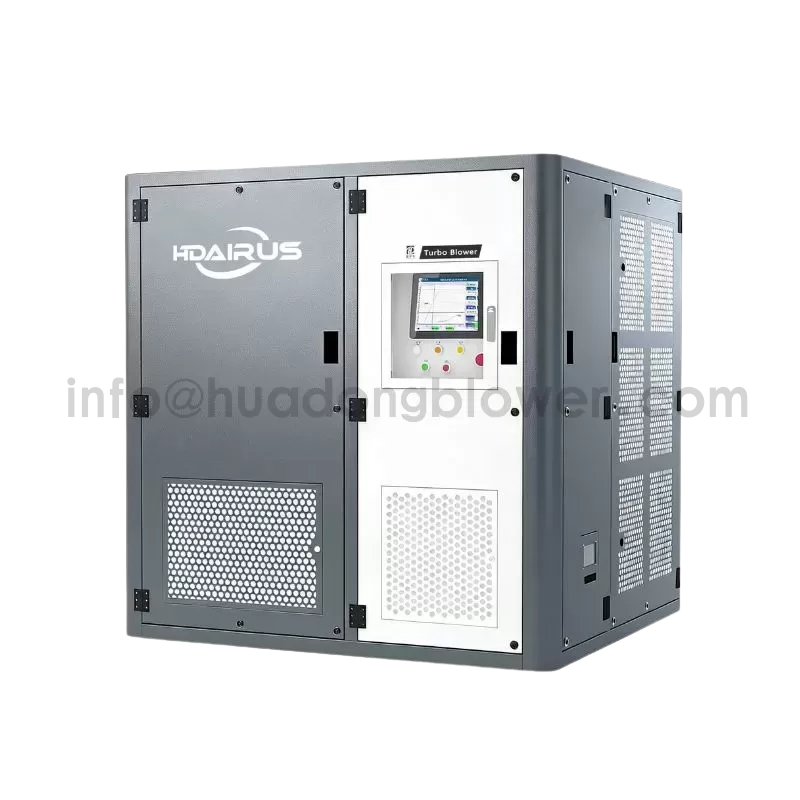
Traditional oil-injected or mechanical-bearing oil-free compressors pose significant risks to high-tech cleanrooms due to oil vapor backstreaming, mechanical vibration, and thermal instability. Magnetic Levitation (Maglev) Centrifugal Air Compressors solve these issues by suspending the high-speed rotor in a frictionless magnetic field, providing 100% oil-free, vibration-free, and energy-efficient motive air.
1. Cleanroom Risks of Traditional Compressed Air Systems
CLEANROOM CONTAMINATION & OPERATIONAL RISK MATRIX
---------------------------------------------------------------------------------
Risk Factor              Traditional Air Compressor       Impact on Electronics Yield
---------------------------------------------------------------------------------
Oil Vapor / Hydrocarbons Trace lubricants pass through   Wafer haze, PCB solder joint
                         filtration into cleanroom air    de-wetting, lens fogging

Micro-Vibration          Physical contact bearings       Distorts precision lithography,
                         generate high-frequency noise    interferes with SMT alignment

Thermal Energy Loss      High mechanical friction and    Increases cleanroom HVAC load
                         heat generation                 and thermal fluctuation risks
---------------------------------------------------------------------------------
100% Oil-Free Air (ISO 8573-1 Class 0 Certification)
Even "oil-free" dry screw compressors rely on oil-lubricated gearboxes and mechanical shaft seals. Over time, seal degradation allows microscopic oil mist to migrate into the process air. In SMT reflow soldering or wafer coating, hydrocarbon vapors cause solder de-wetting, pinhole voids, and loss of optics transparency, costing manufacturers millions in scrapped yields.
Elimination of Micro-Vibration in Precision Environments
Lithography steppers, automated optical inspection (AOI) tools, and high-speed pick-and-place machines operate with micrometer-level precision. Mechanical bearings in conventional compressors transmit floor vibrations that disrupt nearby precision tooling. Maglev compressors eliminate physical contact, keeping vibration levels below 0.5 mm/s.
2. Core Technical Advantages of Maglev Turbo Technology
Mechanical Bearing vs. Maglev Centrifugal Air Compressors
---------------------------------------------------------------------------------
Parameter                Mechanical Bearing Compressor   Maglev Centrifugal Compressor
---------------------------------------------------------------------------------
Rotor Support            Ball / Journal Bearings          Active Magnetic Bearings (AMB)
Lubrication System       Required (Oil / Grease)          100% Absolutely Oil-Free
Mechanical Friction      Continuous contact friction      Zero physical contact friction
Energy Efficiency        Standard Isentropic Curve        30% - 40% Energy Savings
Maintenance Interval     Frequent bearing & oil changes   10+ Years Maintenance-Free
---------------------------------------------------------------------------------
Active Magnetic Bearing (AMB) Kinematics
Active Magnetic Bearings suspend the high-speed rotor in mid-air using electromagnetic force. Position sensors monitor rotor movement thousands of times per second, dynamically adjusting current to keep the rotor perfectly centered without physical contact or wear.
Direct-Drive High-Speed Permanent Magnet Motor
By eliminating speed-increasing gears, drive belts, and mechanical couplings, the permanent magnet motor drives the impeller directly at ultra-high speeds (exceeding 30,000 to 60,000 RPM). This direct-drive configuration achieves unmatched isentropic efficiency, lowering power consumption by up to 30% to 40% compared to traditional positive displacement or geared centrifugal compressors.
3. Long-Term Reliability and Cleanroom HVAC Integration
Electronics fabs operate continuously 24/7/365, where compressor downtime directly halts production lines.
Predictive Diagnostics via Smart PLC Integration: Built-in sensor arrays track rotor displacement, current draw, and temperature in real time, communicating via industrial protocols (Modbus, Profinet) to the central cleanroom management system.
Reduced Cleanroom HVAC Load: Superior motor efficiency means significantly less electrical energy is converted into ambient ambient waste heat, reducing the cooling load on cleanroom air conditioning systems.
Plug-and-Play Skid Architecture: Compact footprint allows easy installation inside utility rooms without massive concrete inertia pads, thanks to zero dynamic vibration output.
HDAirus: High-Efficiency Maglev Solutions for High-Tech Fabs
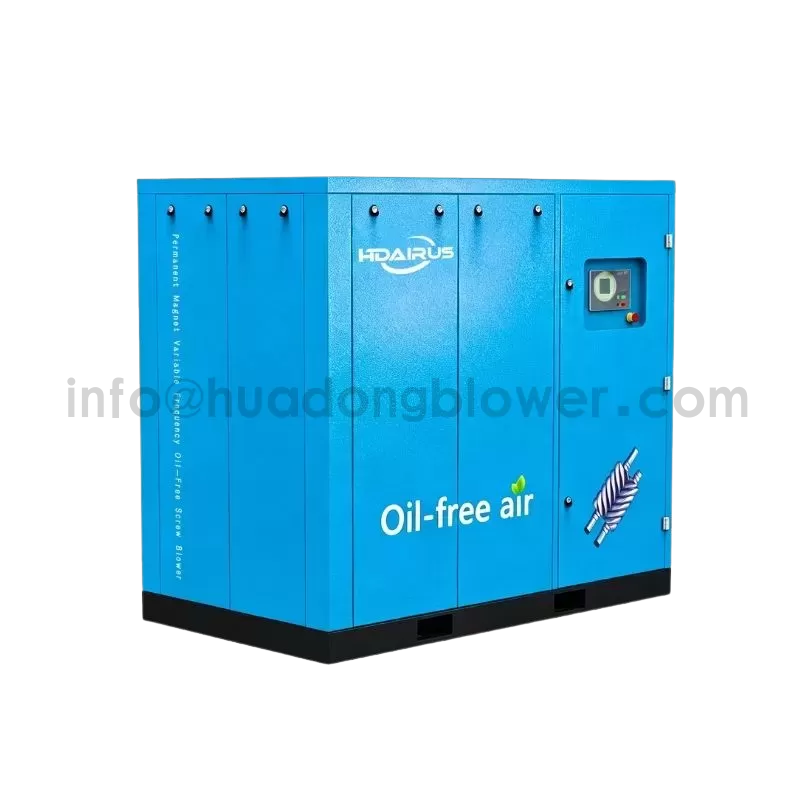
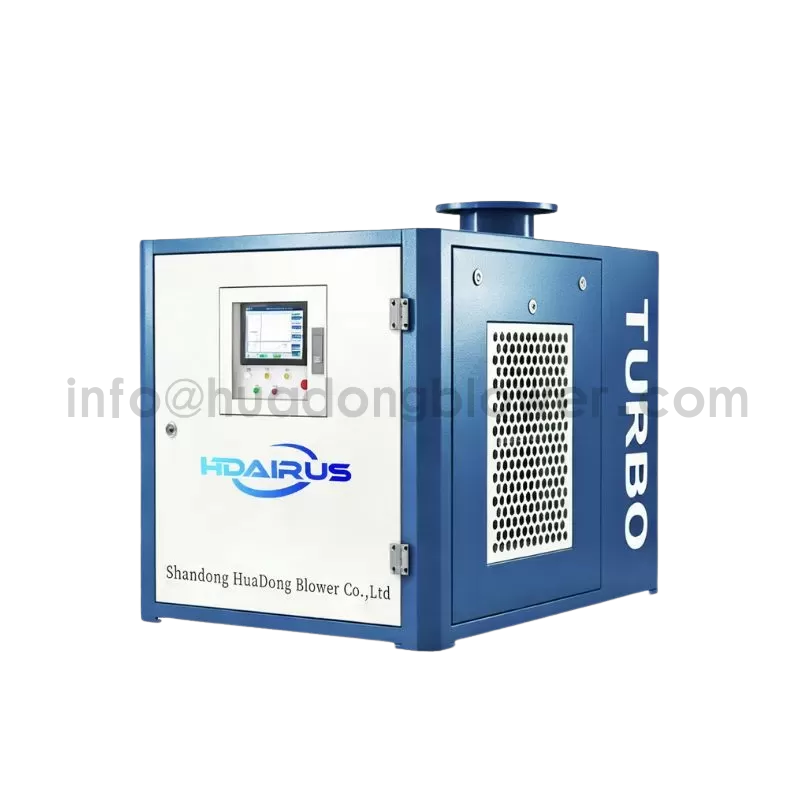
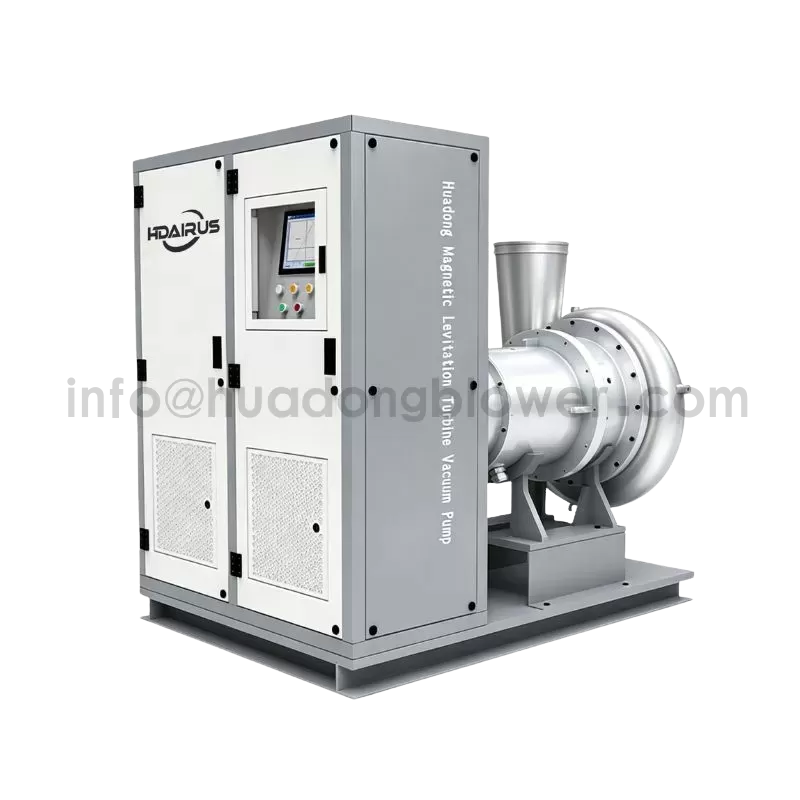
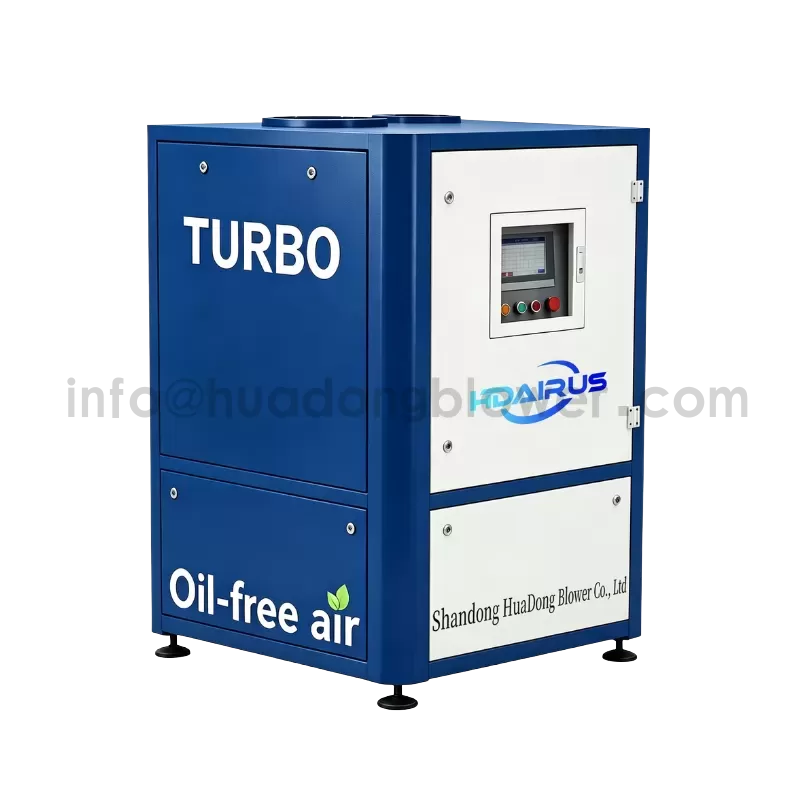
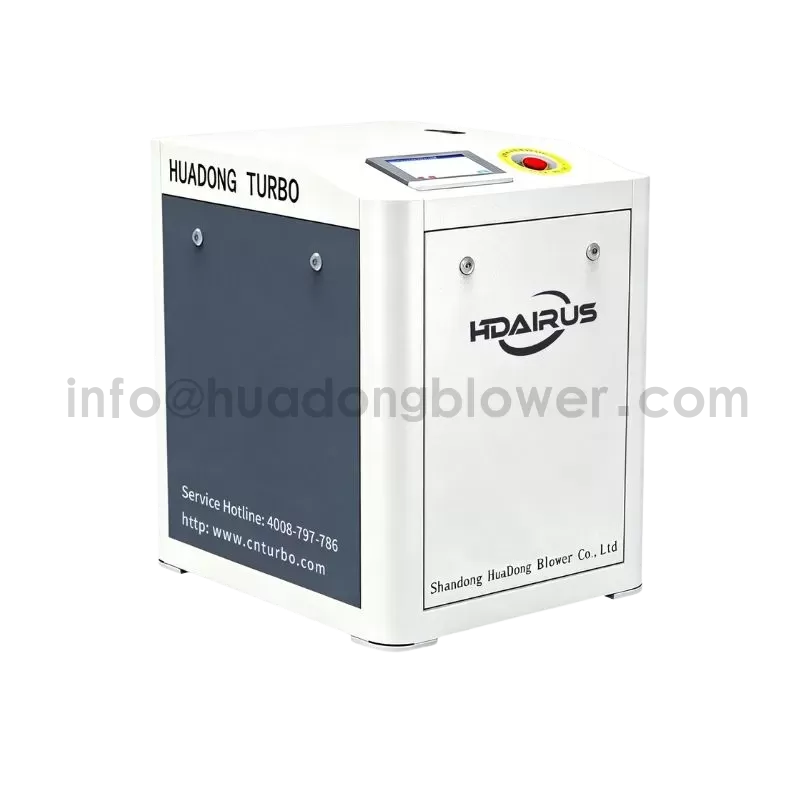
HDAirus (Shandong Huadong Blower Co., Ltd.) engineers advanced magnetic levitation (Maglev) turbo blowers and energy-efficient centrifugal equipment designed for demanding electronics, semiconductor, and precision manufacturing applications.
Factory-Direct Sourcing (Venta directa de fábrica): Direct manufacturing supply eliminates distributor markups and delivers custom engineering support for cleanroom utility upgrades.
Turnkey Quiet Skid Enclosures: Fully integrated skid packages featuring smart VFD frequency control, integrated intake air filtration, and acoustic enclosures engineered for ultra-quiet cleanroom operation.
Zero-Contamination Assurance: Designed to deliver pure, dry, oil-free process air, protecting sensitive SMT and semiconductor tools from cross-contamination.
Recommended Products