High-Pressure Pneumatic Conveying: The Advantages of Using Screw Blowers in Cement and Flour Mills
Release time: Aug.06.2026
Click volume: Views
In high-capacity dry bulk facilities—specifically cement manufacturing plants and large-scale commercial flour mills—pneumatic conveying systems are the primary muscle for moving raw materials and finished powders. Whether pushing heavy raw meal and Portland cement through long pipeline networks or transferring delicate wheat flour and semolina into storage silos, the motive air supply accounts for a massive portion of total plant energy consumption.
While traditional tri-lobe Roots blowers have long been the industry workhorse, high-throughput operations running at higher pressures (above 70 to 100 kPa) encounter severe energy loss and high discharge air temperatures.
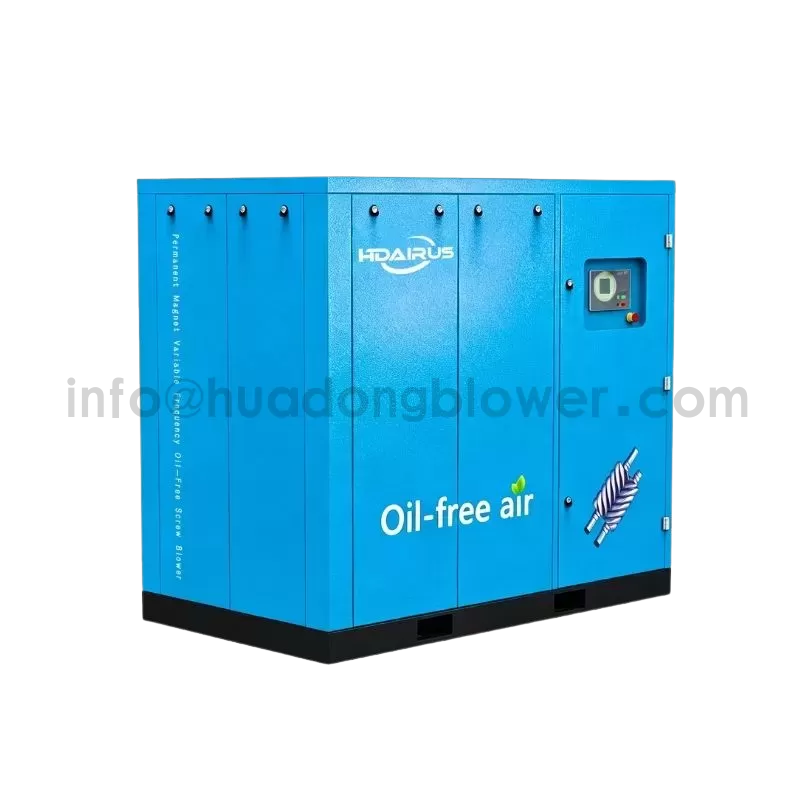
To overcome these thermodynamic limits, plant managers are increasingly upgrading to Rotary Screw Blowers. By combining positive displacement reliability with internal helical compression, screw blowers deliver massive energy savings and cooler, oil-free conveying air.
1. Thermal and Operational Demands in Cement vs. Flour Conveying
BULK MATERIAL CONVEYING COMPARISON
---------------------------------------------------------------------------------
Parameter                Cement & Raw Meal              Wheat Flour & Semolina
---------------------------------------------------------------------------------
Material Bulk Density    High (1.1 - 1.6 kg/L)           Medium (0.5 - 0.6 kg/L)
Abrasiveness             Extremely high (clinker dust)   Non-abrasive, organic powder
Thermal Sensitivity      Low (heat-tolerant)             High (starch pastes above 50°C)
Contamination Risk       Dust / moisture blockages       Food safety / bacterial growth
Explosion Hazard         None                            High (combustible dust zone)
---------------------------------------------------------------------------------
Flour Milling: The Heat & Moisture Barrier
Flour is an organic, heat-sensitive powder. If motive air temperatures exceed 50 to 60 degrees Celsius, starch granules within the flour undergo thermal degradation, gluten proteins denature, and condensation forms inside the pipe walls. Moisture causes flour to paste, creating sticky buildup that harbors mold, invites pest infestation, and clogs conveying lines.
Cement Production: High Line Resistance & Continuous Duty
Cement and pulverized raw meal are dense, heavy powders. Conveying them over hundreds of meters to tall storage silos requires continuous discharge pressures between 80 kPa and 150 kPa. Under these high backpressures, traditional blowers run extremely hot and consume excessive power due to internal slip losses.
2. Why Screw Blowers Outperform Traditional Lobe Technology
The core difference between traditional rotary lobe blowers and rotary screw blowers lies in how air is compressed.
Roots Blowers vs. Screw Blowers at High Pressures (> 80 kPa)
---------------------------------------------------------------------------------
Feature                  Tri-Lobe Roots Blower           Rotary Screw Blower
---------------------------------------------------------------------------------
Compression Type         External isometric compression  Internal helical compression
Isentropic Efficiency    55% - 65%                       75% - 85%
Discharge Air Temp       High (often > 110°C)            Significantly lower (cooler air)
Energy Consumption       High power draw at high pressure Up to 30% energy reduction
Noise Level              Pulsating, high-frequency noise Smooth, quiet rotation
---------------------------------------------------------------------------------
Internal Helical Compression (Internal Pressure Build)
Roots blowers do not compress air inside the casing; they push air against system backpressure (external compression), creating thermodynamic inefficiency and high heat at pressure. Screw blowers feature precision male and female intermeshing helical rotors that progressively compress air inside the rotor pocket before discharge. This internal compression reduces energy consumption by up to 30%.
Lower Discharge Temperatures for Sensitive Powders
Because internal screw compression is far more thermodynamically efficient, less mechanical energy is converted into waste heat. The resulting air discharge temperature is substantially lower, protecting heat-sensitive wheat flour from pasting and eliminating the need for oversized, power-hungry external air coolers in mid-pressure lines.
3. Critical Reliability Features for 24/7 Bulk Handling
Bulk material transfer lines in cement plants and flour mills operate on continuous schedules where unscheduled downtime causes costly logistics bottlenecks.
100% Oil-Free ISO 8573-1 Class 0 Air: Precision timing gears keep the helical rotors in perfect synchronization without rotor-to-rotor contact. No lubricating oil is present in the compression chamber, ensuring food-grade purity for flour and preventing oil-bound cake formation in cement lines.
Wide Pressure Capabilities (up to 150 kPa): Screw blowers comfortably bridge the pressure gap between standard Roots blowers (up to 98 kPa) and heavy industrial air compressors, making them ideal for long-distance dense-phase or semi-dense phase pneumatic lines.
Turnkey VFD Energy Matching: Screw blowers adapt seamlessly to Variable Frequency Drives. When conveying lighter loads or running reduced line capacities, the blower automatically turns down speed, matching power draw directly to material flow rate.
HDAirus: High-Efficiency Bulk Material Pneumatic Solutions
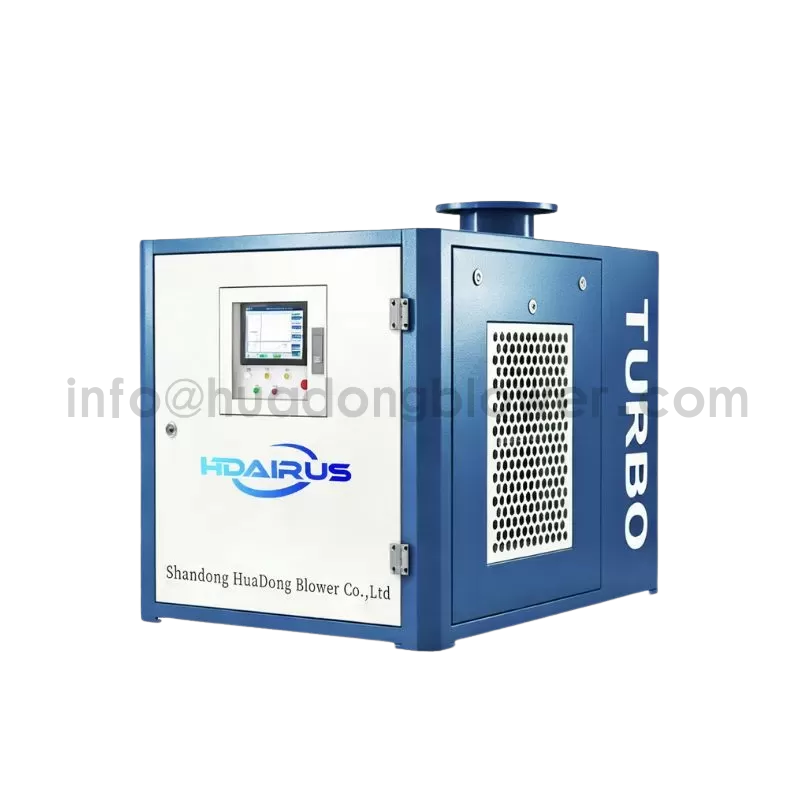
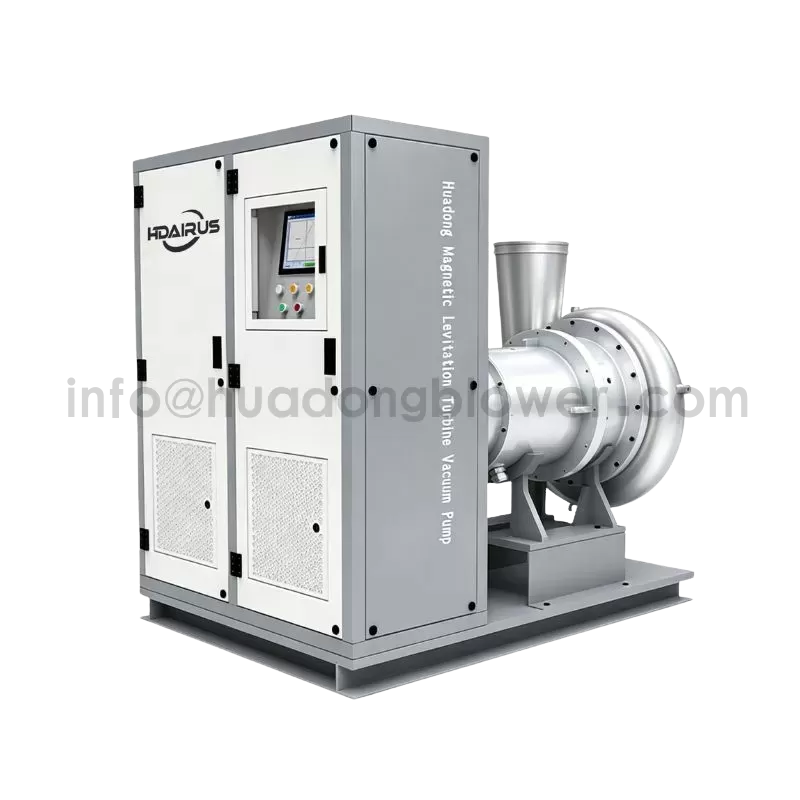
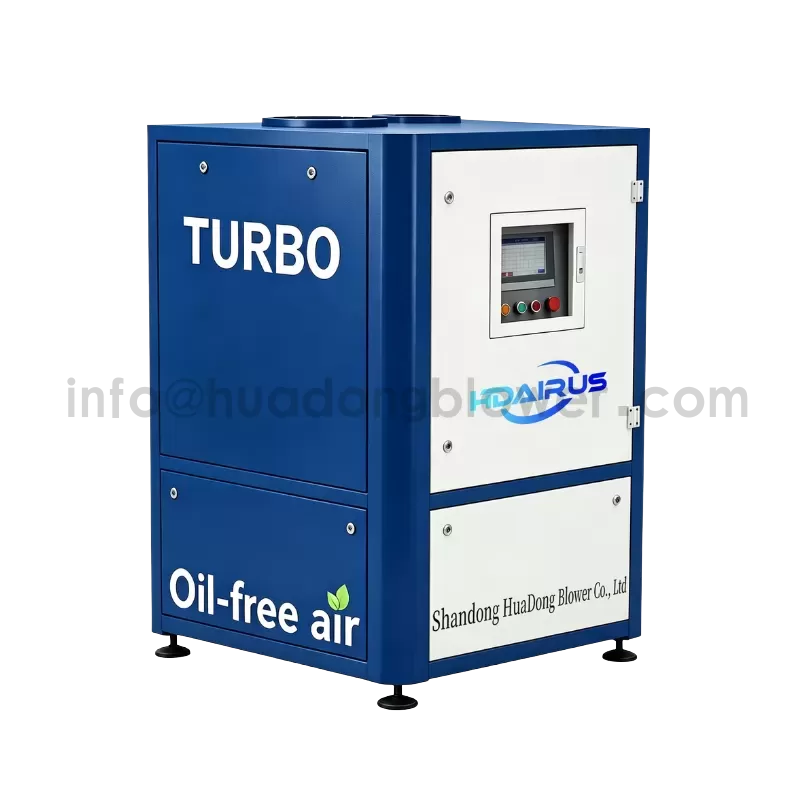
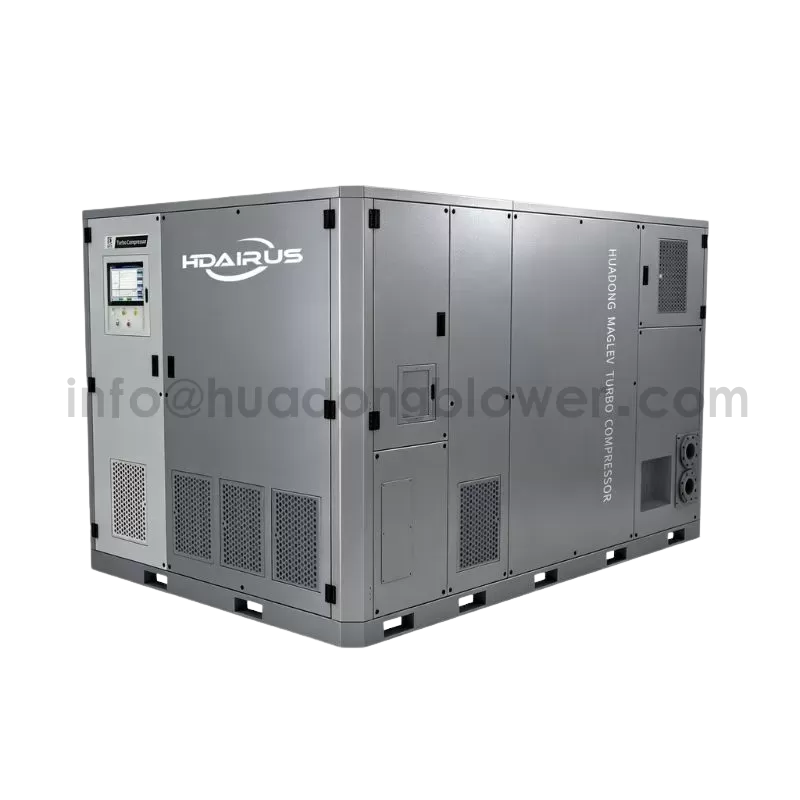
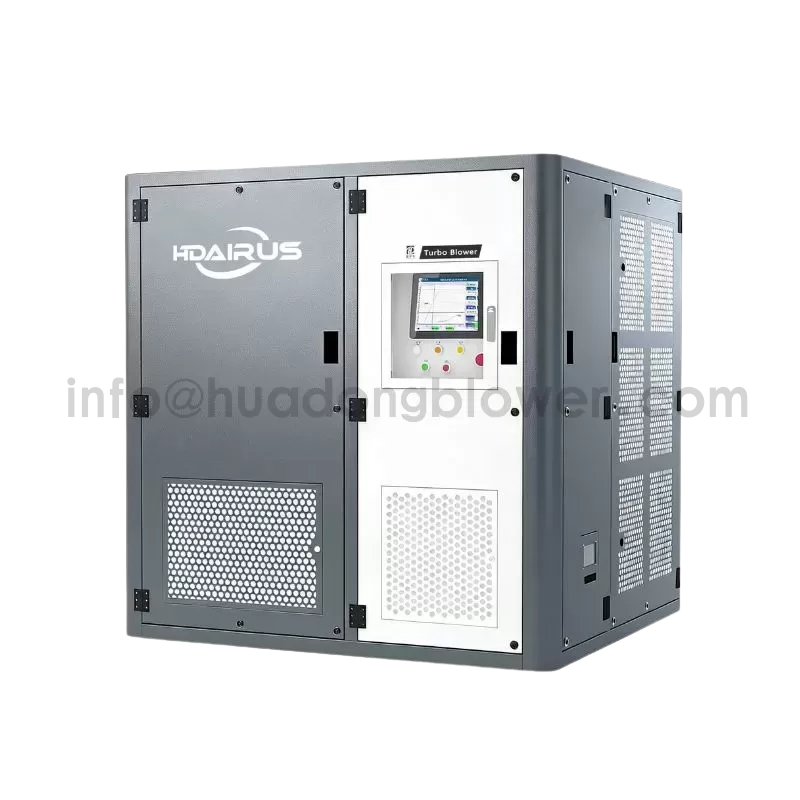
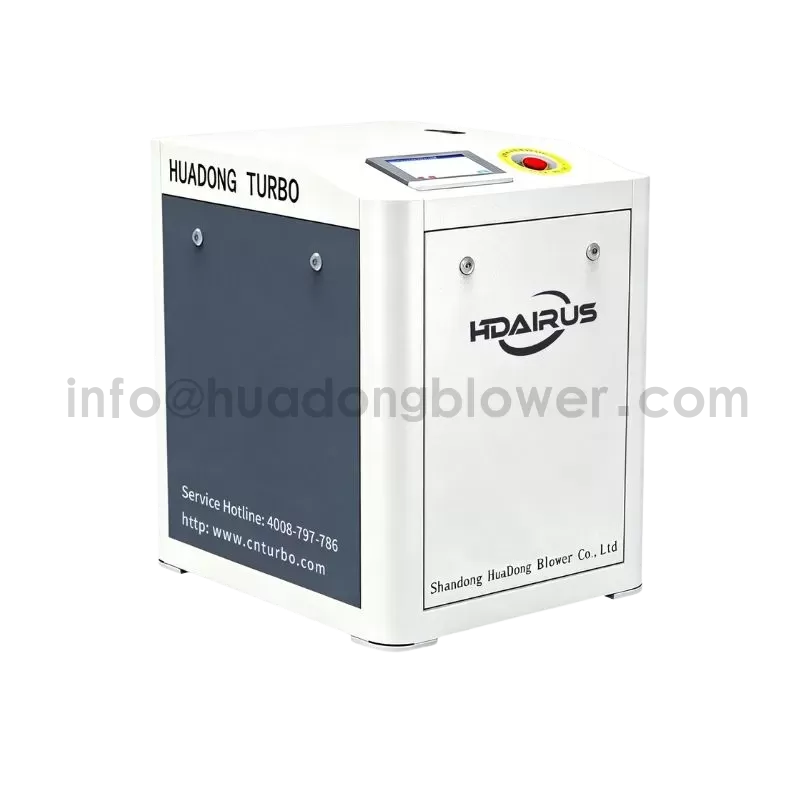
HDAirus (Shandong Huadong Blower Co., Ltd.) manufactures heavy-duty positive displacement blowers and advanced energy-saving compressor packages tailored for global cement, food processing, and bulk material handling industries.
Factory-Direct Sourcing (Venta directa de fábrica): Buying directly from our primary manufacturing facility lowers capital investment while providing direct access to specialized engineering support for plant upgrades.
Integrated Thermal & Air Control Packages: Complete skid packages equipped with high-efficiency inlet filtration (essential for dusty cement environments), discharge silencers, and optional integrated aftercoolers.
ATEX-Compliant Explosive Dust Designs: Customized electrical configurations, spark-proof components, and certified motors engineered specifically for combustible dust zones in commercial flour mills.
Recommended Products