Lowering Lifecycle Costs: The Energy-Saving Benefits of Variable Speed Screw Blowers in Industrial Applications
Release time: Aug.13.2026
Click volume: Views
In modern heavy industrial manufacturing—spanning municipal wastewater treatment, pneumatic conveying, chemical processing, and fermentation—the utility air supply system is one of the largest consumers of plant electricity. For high-volume, low-pressure applications (typically between 30 kPa and 120 kPa), operational energy costs can account for up to 75% to 80% of the blower’s total lifecycle cost.
Traditional fixed-speed blowers or older lobe designs operate with significant throttling or relief valve losses when process demands drop. Variable Speed Rotary Screw Blowers eliminate these system losses. By combining the high thermodynamic efficiency of internal screw compression with the dynamic flexibility of Variable Frequency Drives (VFD), these machines deliver massive energy savings and drastically lower the Total Cost of Ownership (TCO).
1. Understanding the Blower Total Cost of Ownership (TCO) Breakdown
TYPICAL 10-YEAR INDUSTRIAL BLOWER LIFECYCLE COST (TCO)
========================================================================
[▓▓▓▓▓▓▓▓▓▓▓▓▓▓▓▓▓▓▓▓▓▓▓▓▓▓▓▓▓▓▓▓▓▓▓▓▓▓▓▓▓▓▓▓▓▓▓▓▓▓ ] Energy Costs: 75% - 80%
[▓▓▓▓▓▓▓                      ] Initial Capital Investment: 10% - 15%
[▓▓▓                          ] Scheduled Maintenance & Parts: 5% - 10%
========================================================================
The Energy Trap of Fixed-Speed Systems
Many industrial processes feature highly dynamic air demands. For example, biological wastewater reactors require varying oxygen loads depending on daily sewage influx, and pneumatic conveying lines demand sudden pressure peaks followed by lower idling flows. Fixed-speed blowers must run at maximum capacity constantly, wasting excess energy by blowing air out of mechanical relief valves or creating extreme pressure drops across inlet throttle valves.
The Efficiency Limit of Lobe Technology
Conventional Roots lobe blowers utilize external compression; air is trapped in the lobe pockets and slammed against the pipeline backpressure at the exit point, which causes high fluid shock losses and limits overall efficiency. Screw blowers utilize internal compression, where the air volume is progressively squeezed inside the helical screw rotors as it moves through the housing, consuming far less shaft power.
2. Technical Synergy: Internal Compression and Variable Speed Drives (VSD)
Roots Lobe vs. Variable Speed Screw Blowers
---------------------------------------------------------------------------------
Evaluation Parameter     Conventional Roots Lobe Blower  Variable Speed Screw Blower
---------------------------------------------------------------------------------
Compression Principle    External (High backpressure shock) Internal (Progressive helical reduction)
Wire-to-Air Efficiency   Baseline Standard               30% to 35% Higher Efficiency
Flow Turn-Down Capacity  Extremely Limited               Broad range (Typically 25% to 100%)
Heat Generation          High discharge temperatures     Optimized thermal thermodynamics
Mechanical Maintenance   Frequent belt/bearing checks    Direct-driven, high-durability seals
---------------------------------------------------------------------------------
Helical Screw Rotor Thermodynamics
The interlocking male and female rotors of a screw blower reduce the internal volume of the gas pocket as it transitions from the intake port to the discharge port. This smooth, continuous internal compression minimizes backflow pulses and pressure waves. As a result, the wire-to-air efficiency increases immediately, allowing a screw blower to use up to 30% less power than a lobe blower even before adding speed controls.
Dynamic Flow Tracking via Variable Speed Drives
Integrating a Variable Frequency Drive allows the blower’s PLC to monitor real-time process parameters (such as dissolved oxygen levels or line pressures) and instantly adjust the motor’s rotational speed. Because shaft power in positive displacement machines drops linearly with speed reduction, a 30% reduction in motor speed correlates directly to a major drop in electrical power consumption, ensuring the blower never draws more energy than the process demands.
3. Long-Term Reliability and Maintenance Optimization
Lowering lifecycle costs involves both saving power and minimizing unplanned mechanical maintenance expenses.
Soft-Start Motor Protection: VFD systems eliminate high electrical inrush currents during motor startup. By ramping speed up gradually, the system removes extreme mechanical shock stresses on the gears, bearings, and shafts, extending the mechanical lifespan of the entire drivetrain.
100% Oil-Free Air Chamber Safeguard: Precision screw profiles run without contacting each other, eliminating the need for oil lubrication inside the compression chamber. This guarantees pure, contamination-free air and eliminates the cost of replacing fouled process filters down the line.
Wide Turn-Down Ratio Stability: High-quality variable speed screw blowers offer a wide flow adjustment range (often down to 25% or 30% of maximum speed) without experiencing the thermal overheating or pulsation limits common in older fan types.
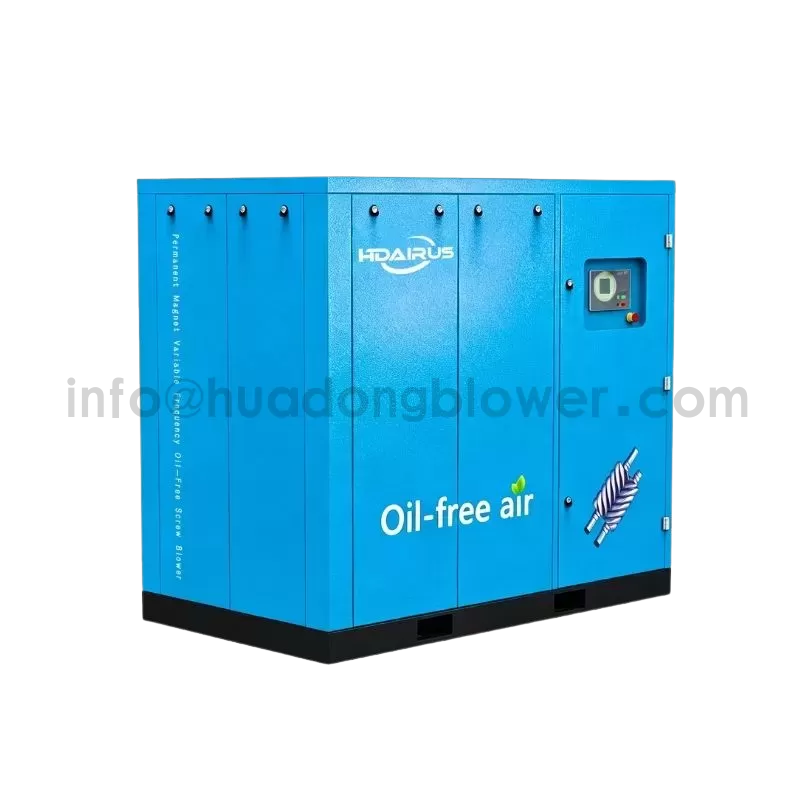
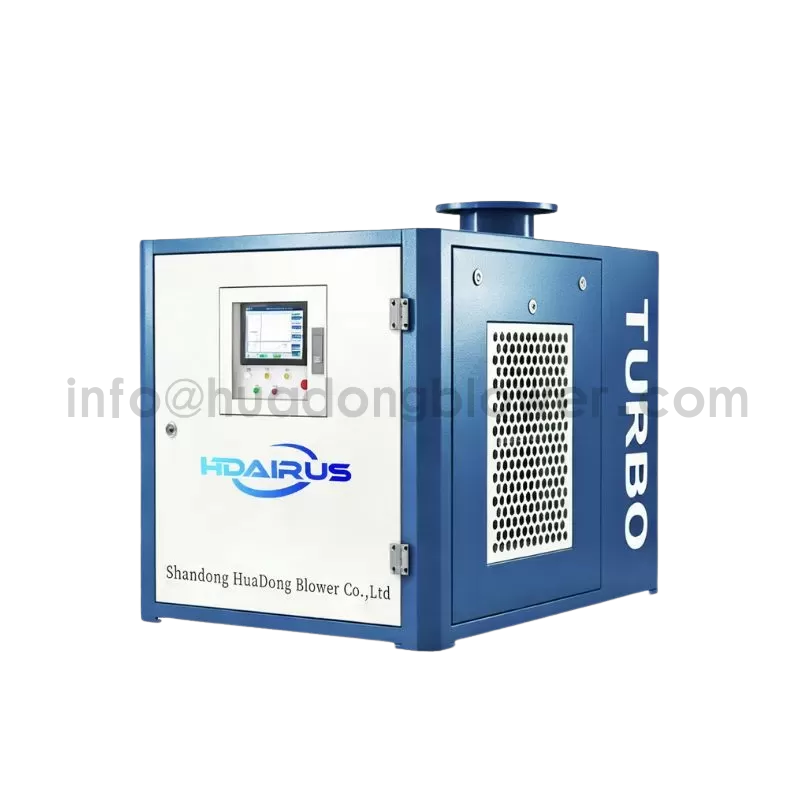
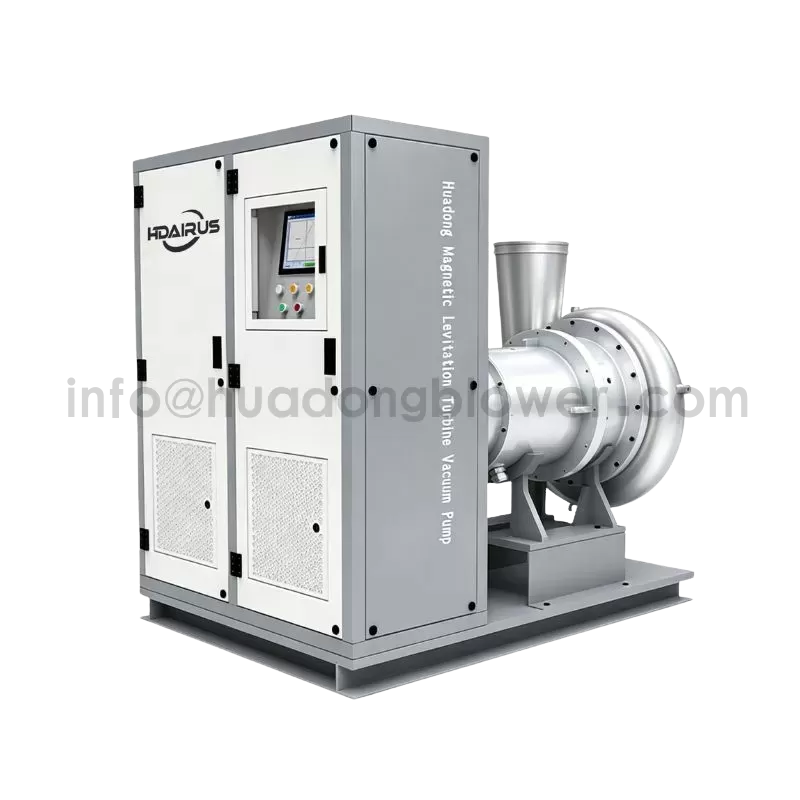
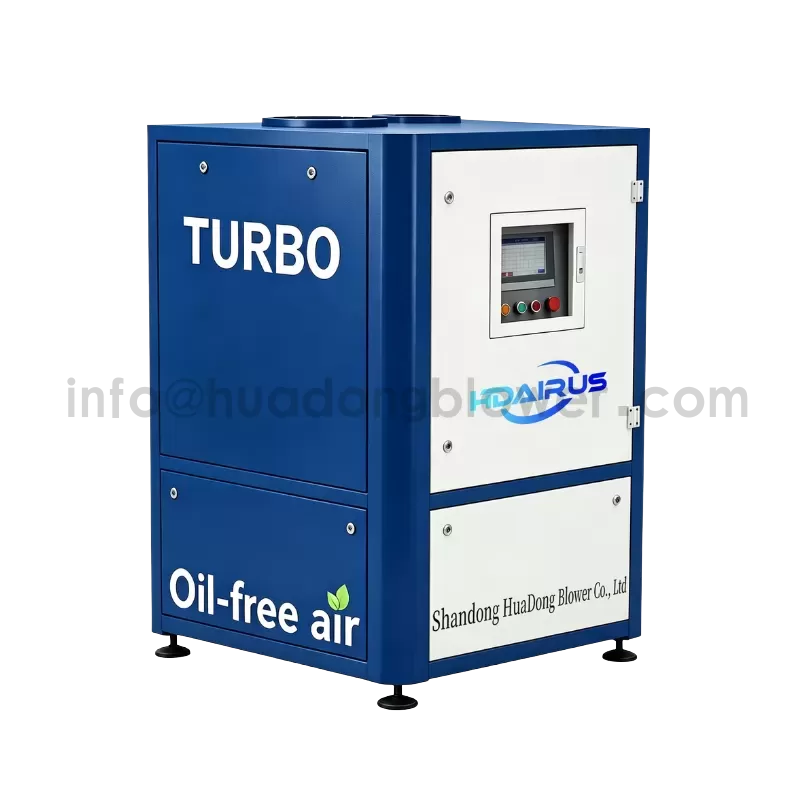
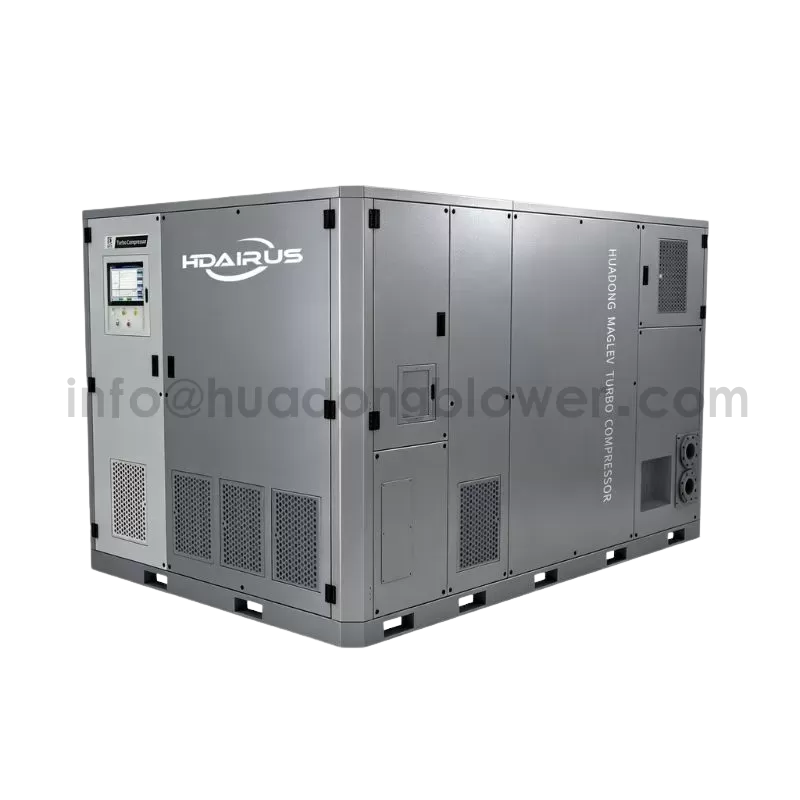
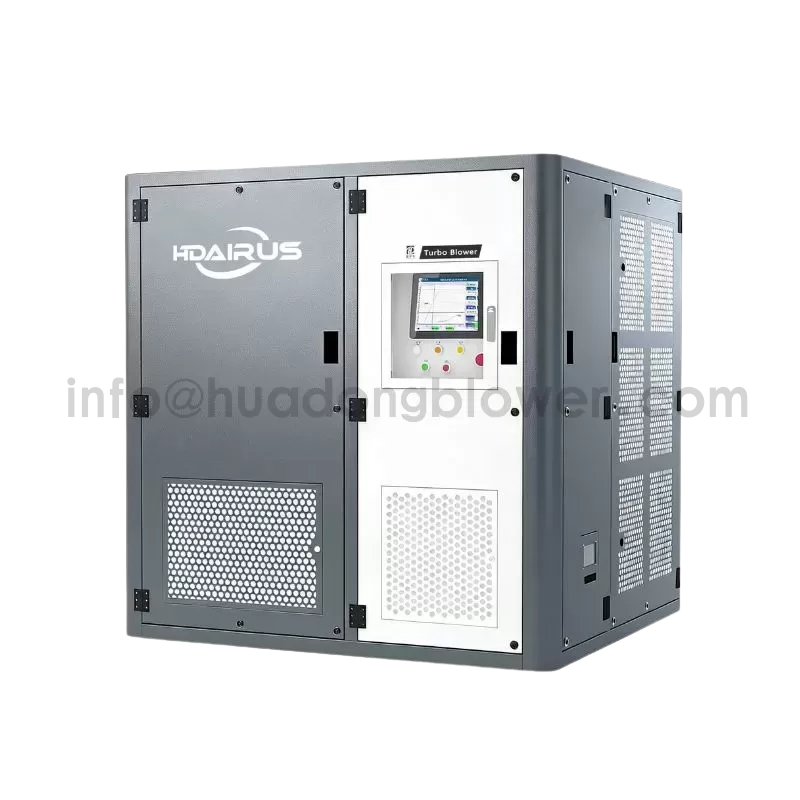
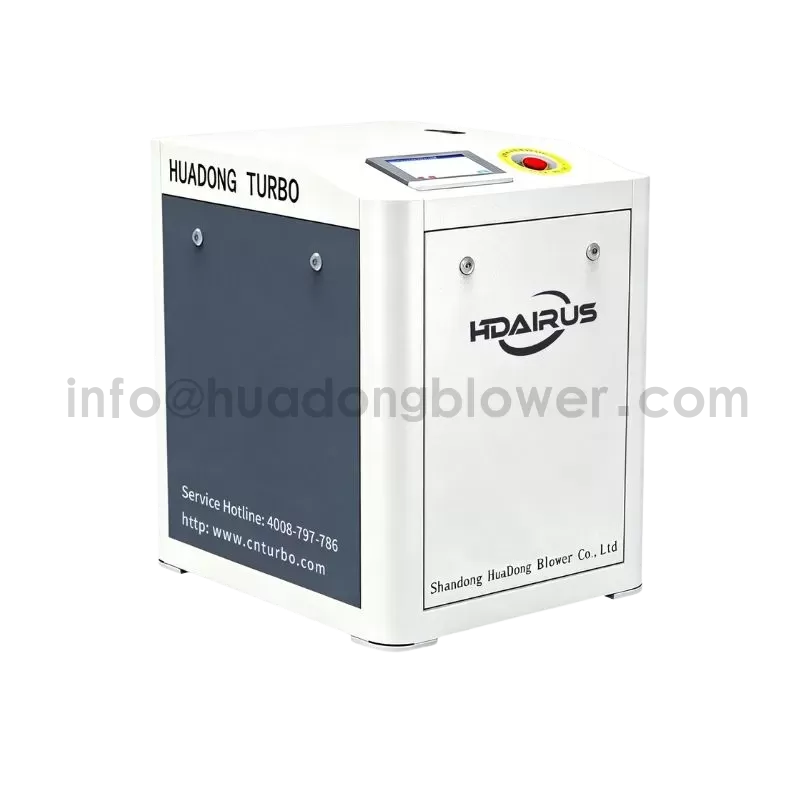
HDAirus: High-Efficiency Rotary Screw Blowers for Lower TCO
HDAirus (Shandong Huadong Blower Co., Ltd.) engineers high-performance energy-saving rotary screw blowers and integrated fluid machinery tailored for continuous-duty industrial processing applications worldwide.
Factory-Direct Engineering Supply (Venta directa de fábrica): Sourcing directly from our manufacturing facility eliminates distributor overhead and gives you direct access to engineering teams for custom system optimization.
Turnkey VFD Intelligent Skid Packaging: Our blowers are delivered as fully enclosed, integrated skid packages complete with high-efficiency permanent magnet motors, premium VFD control cabinets, integrated lubrication systems, and quiet acoustic enclosures (< 80 dBA).
Maximum Lifecycle Savings: By combining advanced helical internal compression with smart dynamic speed control, HDAirus screw blowers help industrial facilities slash their power bills, minimize maintenance, and secure the lowest possible lifecycle operating costs.
Recommended Products