Textile Wastewater Treatment Challenges: Why Industrial Parks Are Retrofitting with Maglev Turbo Blowers
Release time: Sep.23.2026
Click volume: Views
Textile printing and dyeing industrial parks generate some of the most challenging industrial wastewater streams. Characterized by high Chemical Oxygen Demand (COD), strong color intensity (chroma), intense salinity, variable pH, and elevated water temperatures, textile effluent requires continuous, heavy-duty biological treatment.
At the heart of the activated sludge process, aeration blowers account for 50% to 70% of a textile wastewater treatment plant’s total electrical consumption. Traditional Roots blowers and multi-stage centrifugal fans struggle with high energy losses, frequent mechanical wear, and oil contamination risks. To meet stringent environmental discharge standards while controlling skyrocketing operational expenditures (OPEX), industrial parks globally are retrofitting their aeration infrastructure with magnetic levitation (maglev) turbo blowers.
1. Complex Biological Dynamics in Textile Dyeing Effluent
Textile wastewater contains complex synthetic dyes, sizing agents (like PVA), surfactants, and heavy metals. Treating these persistent organic pollutants requires specialized biological aeration strategies.
+-----------------------------------------------------------------------+
|              TEXTILE WASTEWATER MAGLEV AERATION FLOW SCHEMATIC         |
|                                                                       |
|  [ Equalization Basin ] ──> [ Hydrolysis Acidification Tank ]         |
|                                         │                             |
|                                         ▼                             |
|  [ Smart PLC Control ] ───> [ Maglev Turbo Blower ]                   |
|                                         │                             |
|                                         ▼                             |
|  [ Microporous Diffusers ] ─> [ Aerobic Biological Tank (O3/MBR) ]   |
|                                         │                             |
|                                         ▼                             |
|  [ Secondary Clarifier ] ──> [ Advanced Oxidation / Reclaimed Water ] |
+-----------------------------------------------------------------------+
Core Aeration Challenges in Textile Parks
Fluctuating Organic Loads & Shock Temperatures: Dyeing schedules cause rapid spikes in COD and water temperatures (often exceeding 40°C), reducing dissolved oxygen (DO) saturation efficiency and demanding responsive airflow control.
High Diffuser Backpressure: Deep aeration tanks and high-density microporous diffusers create high static head pressure that strains conventional blowers.
Continuous 24/7 Heavy-Duty Operation: Unplanned blower downtime leads to anaerobic sludge bulking, toxic hydrogen sulfide emissions, and severe environmental compliance penalties.
2. Why Maglev Turbo Blowers Solve Textile Aeration Bottlenecks
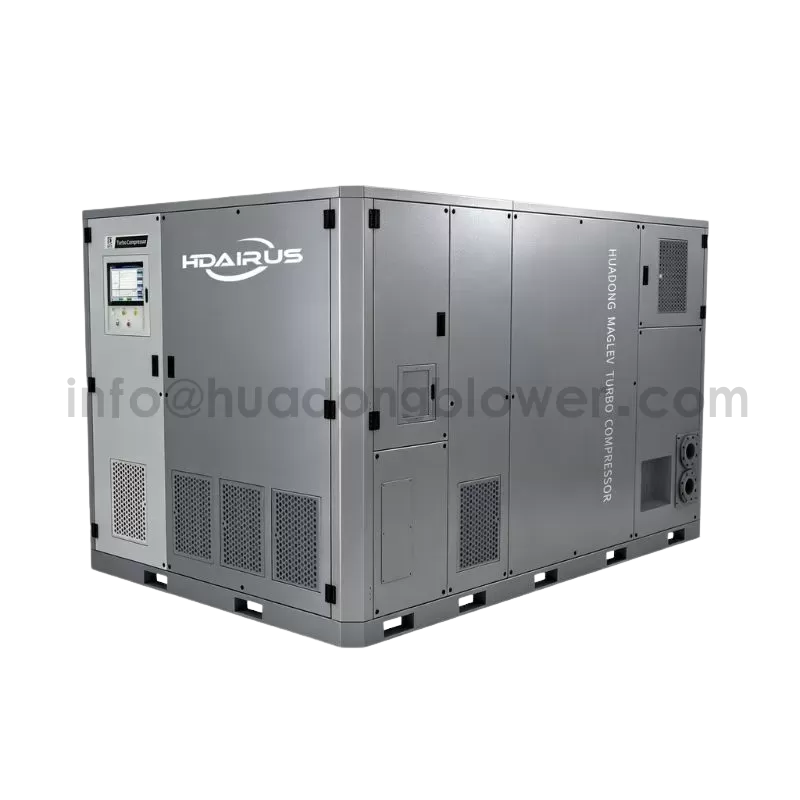
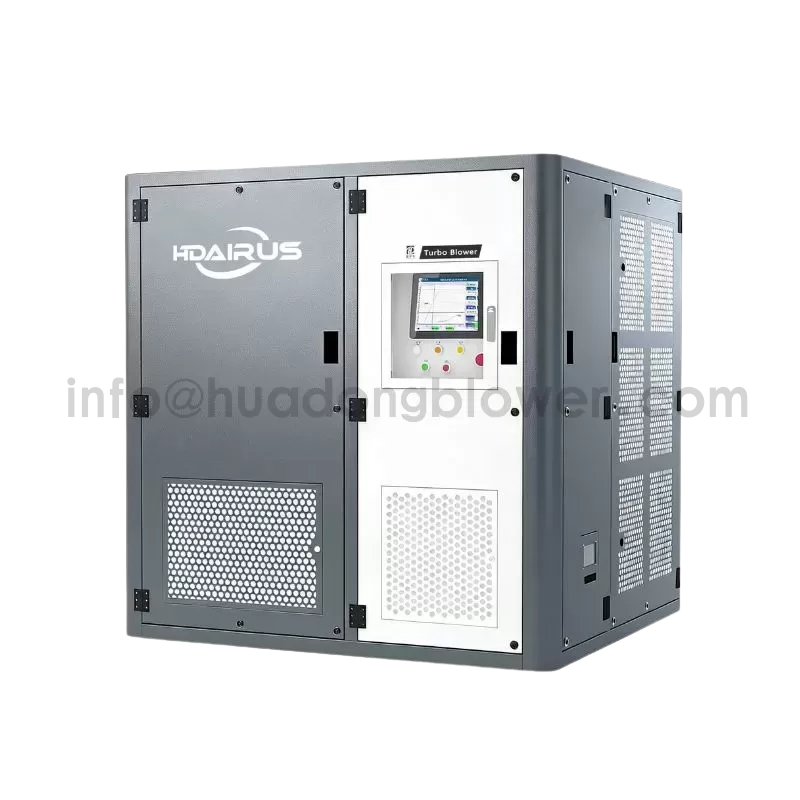
Magnetic levitation turbo blowers utilize active magnetic bearings (AMB), high-speed permanent magnet synchronous motors (PMSM), and precision 3D-flow aluminum alloy impellers. This oil-free, frictionless design offers unmatched performance for textile aeration:
Up to 30%–40% Energy Savings: By eliminating mechanical gear friction and drive belt losses, maglev blowers achieve ultra-high wire-to-air efficiency, dramatically reducing kilowatt-hour consumption per kilogram of COD removed.
100% Oil-Free Operation: Frictionless magnetic suspension operates without liquid lubricants, eliminating the risk of oil leakage fouling fine-bubble diffusers or biological membranes (MBR).
Stepless Turndown Ratio (30%–100%): Integrated high-frequency VFDs adjust airflow in real time based on dissolved oxygen (DO) sensor feedback, matching aeration output to incoming shock loads.
Zero Mechanical Wear & Maintenance: Without contacting bearings, gears, or belts, maintenance is reduced to periodic air filter replacements, extending equipment service life beyond 20 years.
3. Key Engineering Considerations for Industrial Park Retrofits
Replacing legacy blowers with maglev turbo units requires seamless integration into existing plant architecture:
Plug-and-Play Footprint: Compact maglev units occupy less than half the floor space of traditional Roots blower setups, enabling capacity expansions within existing blower room footprints.
High Ambient Heat Dissipation: Industrial textile parks in warm climates require blowers equipped with forced air cooling or water-cooling jackets to ensure stable electronic performance above 45°C ambient temperatures.
Acoustic & Vibration Control: Active vibration cancellation prevents structural damage to aging piping headers, while integrated enclosures lower noise levels to below 75 dB(A).
4. Manufacturing Excellence by Shandong Huadong Blower Co., Ltd.
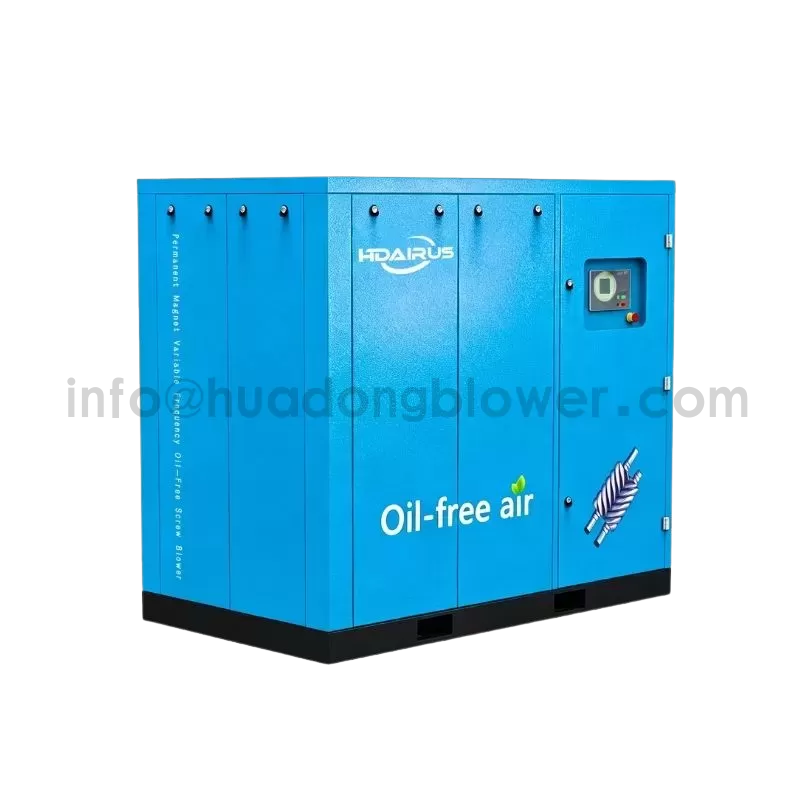
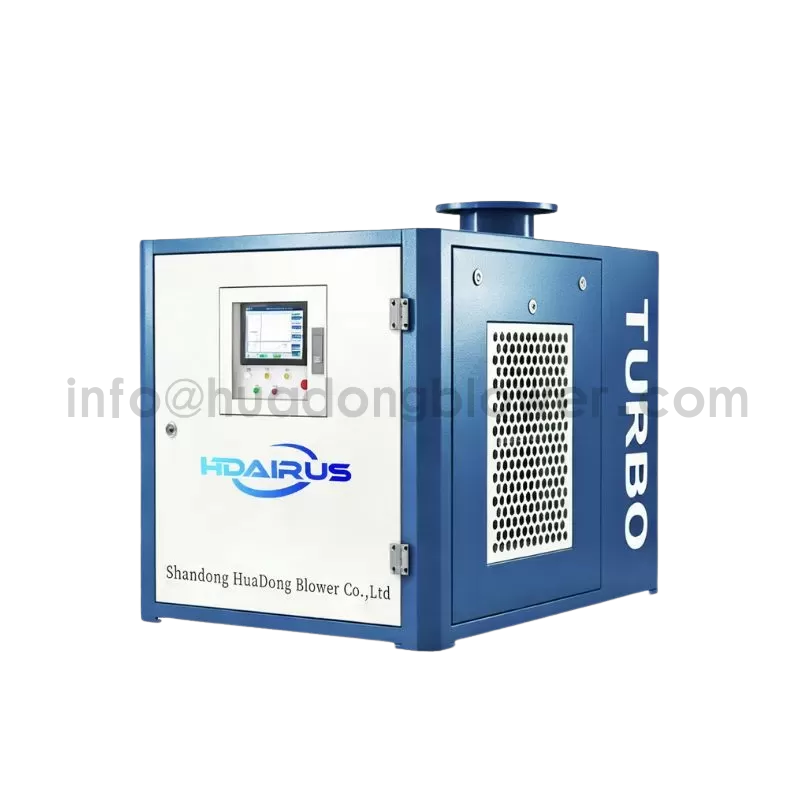
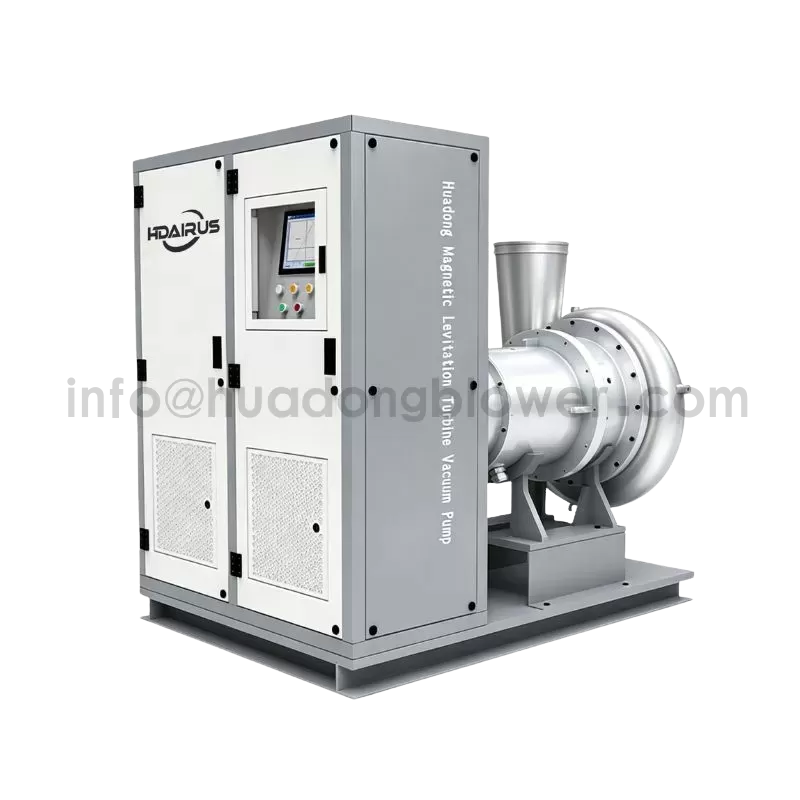
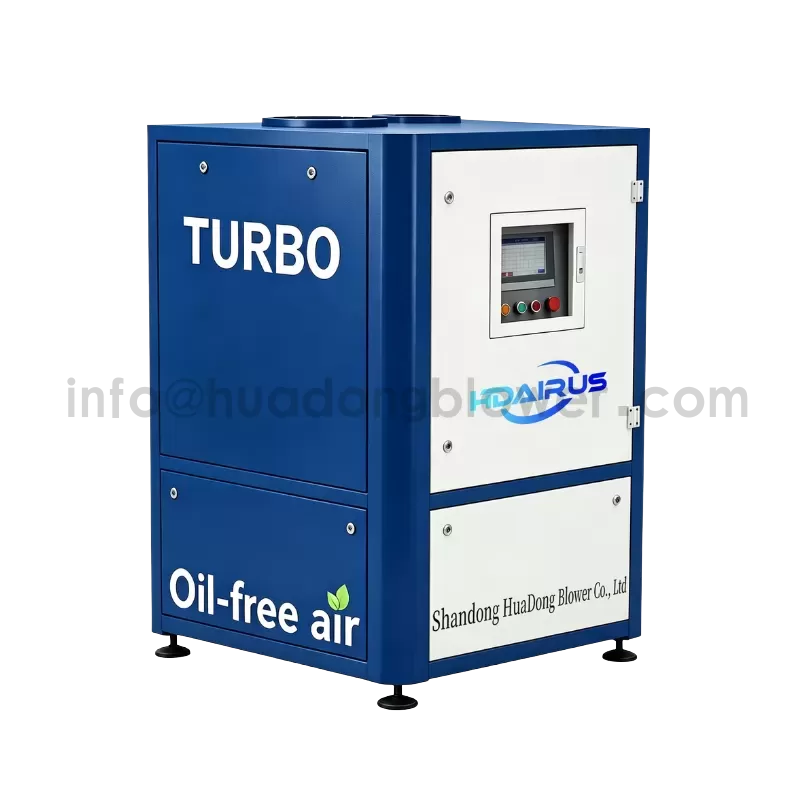
Shandong Huadong Blower Co., Ltd. is a pioneer in manufacturing high-efficiency process air machinery for industrial environmental engineering. Operating from its 100,000 square meter smart manufacturing center in Zhangqiu, Jinan, China, the company engineers advanced HDAirus maglev turbo blowers specifically configured for demanding textile effluent treatment plants.
Engineering Highlights of HDAirus Maglev Turbo Blowers
Self-Developed Active Magnetic Bearing System: Real-time orbital control sampling at 10,000 Hz ensures precise rotor suspension even during sudden grid voltage fluctuations.
Intelligent Touchscreen & Cloud Monitoring: Integrated PLCs support Modbus, Profibus, and Ethernet communications, allowing centralized monitoring of blower power, temperature, and vibration levels.
Turnkey Retrofit Support: Pre-assembled skid packages featuring built-in discharge silencers, check valves, and VFD controls simplify pipe connection and electrical commissioning.
By upgrading to HDAirus maglev turbo blowers, textile industrial park operators achieve substantial electrical energy savings, stabilize biological treatment processes, and maintain long-term environmental compliance.
Recommended Products